
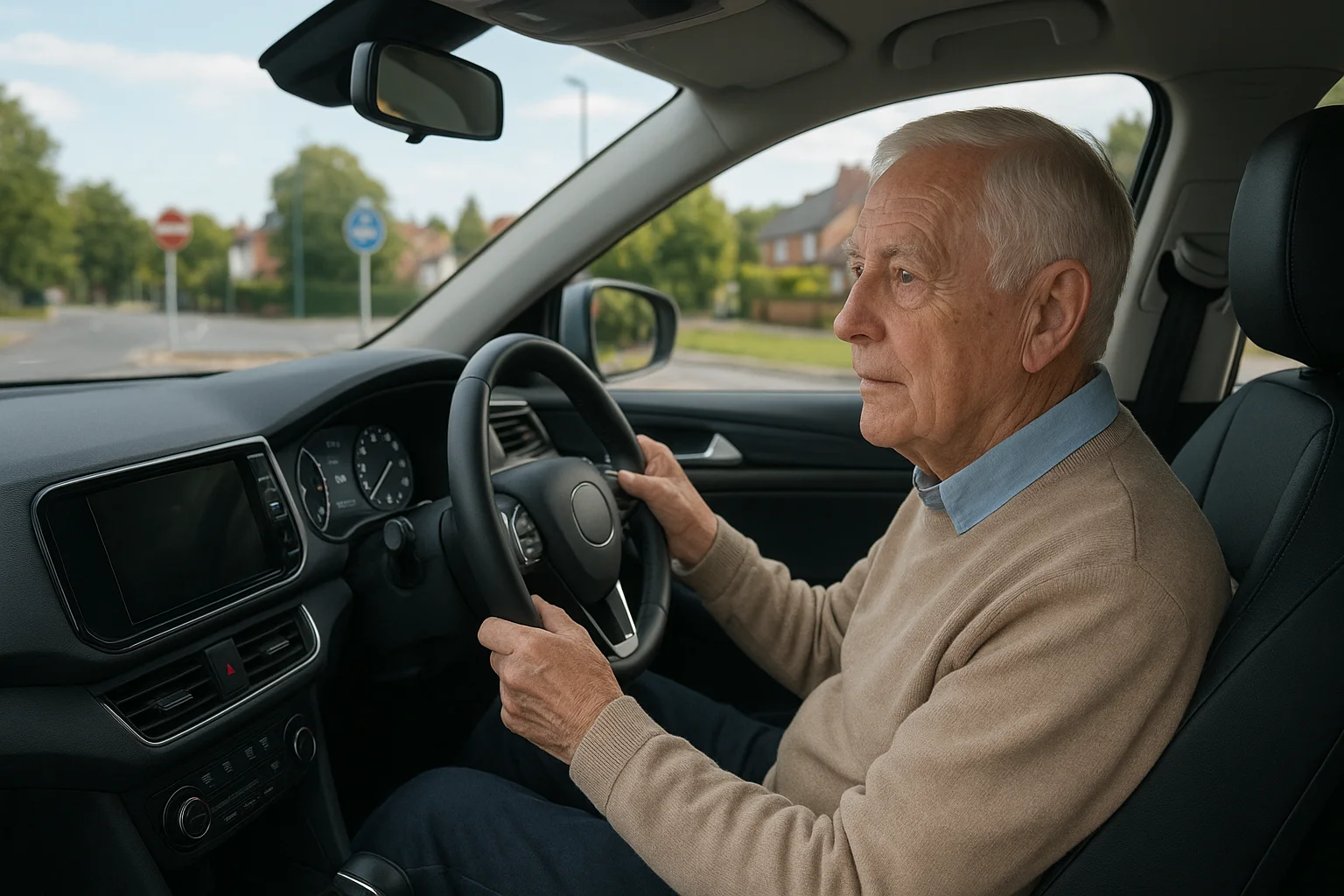
UK driving licence rules in 2026 are a mixture of confirmed changes and proposals still awaiting final decisions. The biggest development is the government’s Road Safety Strategy, published on 7 January 2026, which launched consultations covering older-driver eyesight testing and a possible minimum learning period for learner drivers. Neither proposal has yet become a general legal requirement.
Meanwhile, several practical driving-test booking changes have already taken effect in Great Britain during 2026, and work continues on a digital driving licence through GOV.UK Wallet.
Drivers aged 70 and over must still renew their licence every three years under the existing system. Most DVLA and DVSA rules discussed here apply to England, Scotland and Wales, while Northern Ireland operates a separate licensing system through the DVA.
What Is Actually Changing for Drivers Over 70 in 2026?
The government has now moved beyond general discussion and formally consulted on introducing mandatory eyesight testing for drivers aged 70 and over. The consultation was launched alongside the Road Safety Strategy on 7 January 2026 and closed on 11 May 2026.
However, compulsory eyesight testing has not yet become a general legal requirement. The consultation considered moving away from relying entirely on drivers to self-declare that they meet eyesight standards, but it did not set a preferred final option.
As of 26 August 2026, the GOV.UK consultation remains listed as closed and says a government response will be published.
The government has also said that wider fitness-to-drive measures, including possible cognitive assessments, may be considered in the future. These should therefore be described as potential future reforms rather than existing rules.
What Are the Current Driving Licence Rules for Over-70s?
Despite the 2026 consultation, the existing renewal system remains in force. In Great Britain, drivers must renew their licence when they reach 70 and then at least every three years.
When renewing, drivers must legally declare that they meet the required eyesight standard and disclose listed medical conditions that could affect safe driving. There is currently no general requirement for a GP, optometrist or other healthcare professional to sign off every over-70 renewal.
If a medical condition is reported, the DVLA may:
- Contact The Driver’s Doctor Or Consultant
- Arrange A Medical Examination
- Request A Driving Assessment
- Require An Eyesight Or Driving Test
- Issue A Shorter Licence Or Require The Driver To Stop Driving
Drivers can face a fine of up to £1,000 for failing to tell the DVLA about a medical condition that affects their driving and may also face prosecution following an accident.
What Changes Could Be Introduced for Elderly Drivers?
At present, any suggestions of specific changes are speculative, but several possibilities have emerged through official reports and public discussions. These include:
- Mandatory Eye Tests: There is growing support for requiring drivers aged 70 and above to take compulsory eye tests every three years, coinciding with licence renewal. This was previously hinted at in the government’s 2019 Road Safety Statement.
- Stricter Medical Verification: Future renewals might require evidence of good health, such as a signed letter from a GP, medical records, or test results,rather than relying solely on the driver’s own assessment.
- Disqualification for Certain Medical Conditions: There may be legal grounds to prevent individuals with cognitive conditions, such as dementia, from driving. Coroners and safety experts have publicly supported this approach.
- Revised Self-Declaration Policies: The DVLA might tighten the guidelines on what must be declared and how medical information is verified before a licence is issued or renewed.
These measures aim to strike a balance between maintaining personal freedom and ensuring the safety of all road users.
How Could These Changes Be Enforced Legally?
Any new regulations would likely be introduced using existing powers under the Road Traffic Act 1988. This act allows the government to adjust licensing rules through secondary legislation, such as statutory instruments, without needing to pass a brand-new law through Parliament.
For example, the government could introduce a new regulation requiring all drivers over the age of 70 to pass a certified eyesight test before renewing their licence. This would be enforceable under the existing legislative framework, making implementation relatively straightforward once a decision is made.
What Else Is Changing in the UK Driving Licence System in 2026?
While much of the attention is on older drivers, several wider reforms are being rolled out that will affect motorists across all age groups.
What Is Happening With Digital Driving Licences in 2026?
The UK government is continuing development of a mobile driving licence that will eventually be stored through GOV.UK Wallet. A limited digital driving licence trial took place in December 2025, with further testing and development continuing during 2026.
However, drivers should not describe the digital driving licence as already generally available. GOV.UK currently states that GOV.UK Wallet is not yet ready for general use, while government technical documentation updated in August 2026 lists the mobile driving licence as “available soon.”
The government intends digital credentials to complement rather than immediately eliminate physical documents, and use of GOV.UK Wallet is planned to be optional.
What Driving Test Rules Changed in 2026?
Several confirmed changes to car driving test bookings in England, Scotland and Wales came into force during 2026.
- From 31 March 2026: Learners are limited to two changes to a booked car driving test.
- From 12 May 2026: Only the learner taking the test can book and manage their car driving test. Third-party booking services and instructors cannot make the booking on the learner’s behalf.
- From 9 June 2026: When moving a test to another centre, learners are restricted to one of the three nearest test centres to their existing booking.
The government has separately consulted on introducing a minimum learning period, potentially involving a minimum amount of time between passing the theory test and taking the practical test, supervised driving hours or a mandated syllabus.
That consultation closed on 11 May 2026, but these measures should not yet be presented as established requirements.
There is also a confirmed theory-test content update, enhanced questions covering CPR and automated external defibrillators are being introduced from 2026.
Which Driving Licence Rules Are Not New for 2026?
Some rules in the existing article are valid but should not be presented as new 2026 changes.
For towing, drivers who obtained a car licence from 1 January 1997 onwards can tow a trailer weighing up to 3,500kg MAM, subject to the vehicle’s own legal towing limits.
This is an existing entitlement rather than a new 2026 reform. Drivers should always check the categories recorded on their licence and their vehicle’s maximum permitted towing weight.
The statement that EU licence holders living in the UK must exchange their licence within 12 months should also be removed.
In Great Britain, EU licence holders can generally continue driving for as long as their licence remains valid, subject to applicable age and licence conditions. The 12-month rule principally applies to many other foreign licence holders.
UK drivers visiting most EU countries with a standard photocard licence generally do not need an International Driving Permit. A UK insurance Green Card is also not required for driving in the EU, although valid insurance remains compulsory. Drivers using hired or leased vehicles abroad may need a VE103 document.
Conclusion
The biggest change since the original version of this article is that the government has now published its 2026 Road Safety Strategy and formally consulted on eyesight testing for older drivers and minimum learning requirements for learners. These proposals are important, but they should not be confused with rules already in force.
For now, over-70s still renew every three years under the existing system, while the clearest confirmed 2026 changes concern how car driving tests can be booked and changed.
Digital driving licences are also progressing towards wider availability but are not yet generally available through GOV.UK Wallet. Drivers should therefore distinguish carefully between current law, confirmed 2026 changes and proposals awaiting government decisions.
FAQs
Are Eye Tests Mandatory for Drivers Over 70 in 2026?
No. The government consulted on mandatory eyesight testing in 2026, but it has not yet become a general legal requirement.
How Often Must Drivers Over 70 Renew Their Licence?
Drivers in Great Britain must renew at age 70 and then at least every three years thereafter.
Has the New Road Safety Strategy Been Published?
Yes. The government published its Road Safety Strategy on 7 January 2026, replacing the article’s previous reference to an expected late-2025 strategy.
What Driving Test Booking Rules Changed in 2026?
Learners are now limited in how often and where they can move tests, and since 12 May 2026 only the learner taking the test can book or manage it.
Is There Now a Minimum Learning Period Before Taking a Driving Test?
Not yet. The government consulted on a minimum learning period and possible supervised-hours requirements, but these have not yet become general rules.
Can Everyone Use a Digital Driving Licence in 2026?
Not yet. Digital driving licences have been tested, but current GOV.UK information still describes the mobile driving licence as coming soon rather than generally available.
Must EU Licence Holders Exchange Their Licence After 12 Months in Britain?
No. EU licence holders can generally drive in Great Britain while their licence remains valid, subject to relevant age and entitlement rules.